How to say nothing in 425 words.
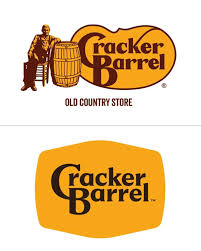
Last month, Southern-style dining chain Cracker Barrel received major backlash after unveiling a new logo. Cracker Barrel is something of an institution, and the design change irked a lot of people. The old, familiar logo featured an overall-clad geezer sitting in a rocking chair next to a barrel. That 48-year-old design was replaced by a more generic, text-only logo as part a $700 million identity overhaul that also included remodeling its restaurants, updating the menu, etc.
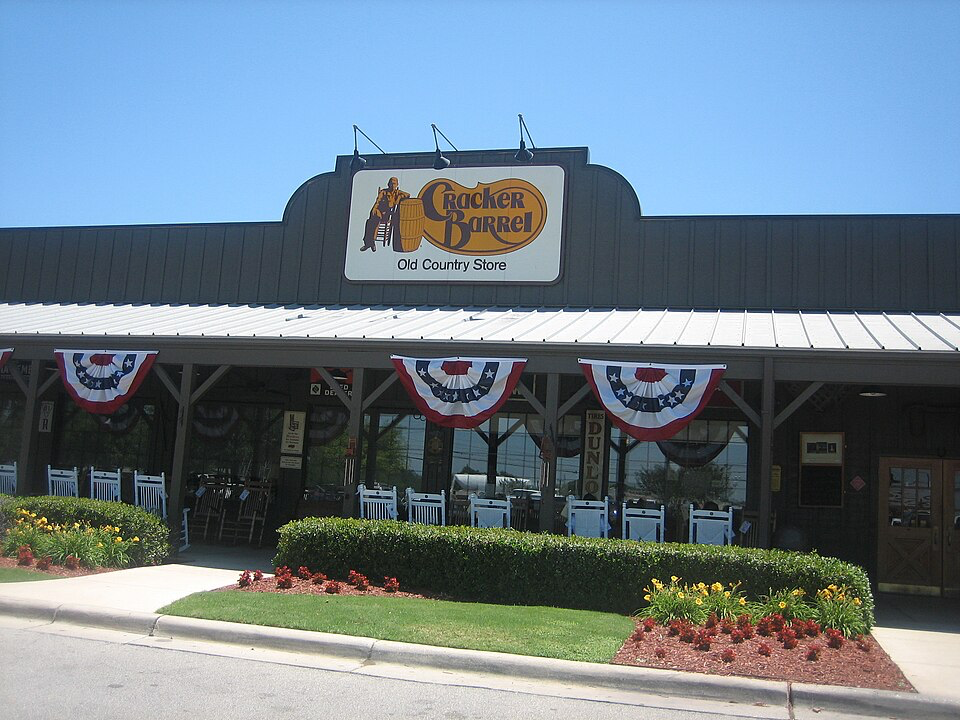

The update prompted outrage for reasons I won’t go into here, the company’s stock nosedived, and Cracker Barrel felt compelled to issue a statement on August 25 defending the change. That statement still appears on the company’s website. Right above that is another statement, published a day later, announcing that the company had thrown in the towel and would restore the previous logo after all.
I really don’t care about Cracker Barrel’s logo, so this post isn’t about that. I just want to examine how the company communicated about the logo change, because it’s a masterclass in bad PR-speak.
Specifically, I want to look at the statement in which Cracker Barrel dug in its heels before rapidly capitulating to customer pressure. Here goes:
Our Promise To You
Weak headline. Promises don’t matter, what matters is action. I don’t care what a billion-dollar listed corporation is promising to me. This headline is an automatic fail because it precedes 400+ words of Cracker Barrel saying that it’s not doing anything.
If the last few days have shown us anything, it’s how deeply people care about Cracker Barrel. We’re truly grateful for your heartfelt voices.
Insincerity. Stripped of all context, this sentence makes it sound like people were wishing Cracker Barrel a speedy recovery or something. No, people were pissed at the company and were trashing it.
You’ve also shown us that we could’ve done a better job sharing who we are and who we’ll always be.
Gibberish. First of all, this is sort of a non-apology apology. They say they “could” have done a better job, not that they should have done a better job, and notice that nowhere in the statement do the words “sorry” or “apologize” or “regret” appear. Also, the reader doesn’t care who they are and who they’ll always be. Corporate promises and identity statements are meaningless.
I must also note the awful use of the word “sharing.” For some reason, “share” has become very common in business communication, replacing words like “tell” and “send.” It sounds stupid and feeble. It’s also self-serving because it implies that you’re being generous (which is usually not the case).
What has not changed, and what will never change, are the values this company was built on when Cracker Barrel first opened in 1969: hard work, family, and scratch-cooked food made with care. A place where everyone feels at home, no matter where you’re from or where you’re headed. That’s the Cracker Barrel you’ll always find.
Manipulative tripe to give people the warm and fuzzies that doesn’t address the complaint being made.
The things people love most about our stores aren’t going anywhere: rocking chairs on the porch, a warm fire in the hearth, peg games on the table, unique treasures in our gift shop, and vintage Americana with antiques pulled straight from our warehouse in Lebanon, Tennessee.
This is probably the best paragraph in the whole statement, because it contains concrete details that paint a picture in the reader’s head. This is how marketing and PR should be done, by the way. If you want the reader to feel a certain way, supply the imagery to evoke that feeling. Never tell readers how they should feel.
We love seeing how much you care about our “old timer.” We love him too. Uncle Herschel will still be on our menu (welcome back Uncle Herschel’s Favorite Breakfast Platter), on our road signs and featured in our country store. He’s not going anywhere — he’s family.
I am reminded of Michael Scott in The Office blathering about how “we’re all family.” Kind of creepy to be honest. You’re a dining chain, not a family. You’re not even family-owned! You’re a NASDAQ-traded corporation!
While our logo and remodels may be making headlines, our bigger focus is still right where it belongs… in the kitchen and on your plate: serving generous portions of the food you crave at fair prices and doing it with the kind of country hospitality that brightens your days and creates lasting memories. Meatloaf, chicken n’ dumplins, country fried steak, sides that taste like Sunday supper, and yes, the world’s best pancakes, they’re all still here, with a few new dishes joining the menu. Whether you’re a long-time fan or a first-time guest, we want you to feel at home around our table.
Now they are starting to actively insult the reader. They could rephrase the first sentence without changing the meaning by saying: “We know you’re upset about the logo and remodels, but we don’t care because we’re focused on what’s important: the food…” See how offensive that would be? They said exactly that but in different words.
The rest of the paragraph is just more patronizing fluff.
We also want to be sure Cracker Barrel is here for the next generation of families, just as it has been for yours. That means showing up on new platforms and in new ways, but always with our heritage at the heart. We take that responsibility very seriously. We know we won’t always get everything right the first time, but we’ll keep testing, learning, and listening to our guests and employees.
Fluff. Meaningless.
At the end of the day, our promise is simple: you’ll always find comfort, community, and country hospitality here at Cracker Barrel. Uncle Herschel wouldn’t have wanted it any other way.
Ditto the above comment.
Thank you for caring so much and come see for yourself the country hospitality that makes Cracker Barrel feel like home.
Empty send-off. A hint of passive-aggressiveness and sarcasm in reframing customer anger as “caring so much.” It’s like saying “thanks for your input” when someone criticizes you. It’s not sincere.
So, pretty much all of this statement is meaningless. It doesn’t communicate anything except attitude, and that attitude is not great.
What this statement does communicate, without explicitly saying it, is that Cracker Barrel is not going to change its logo back. The company just found a really obnoxious way to express that. The real message is carefully hidden from view, delivered without being stated. This comes across as dishonest and manipulative.
Because the statement does not explicitly say that the new logo will be retained, it also doesn’t explain the reasoning behind this decision, and it doesn’t attempt to address people’s complaints. It simply changes the subject. This is disrespectful to customers.
It’s instructive to compare this heels-digging-in statement to the next statement in which Cracker Barrel announces its backflip. This statement is 83 words. Notice the difference:
The Old Timer is Back
We thank our guests for sharing your voices and love for Cracker Barrel. We said we would listen, and we have.
Our new logo is going away and our “Old Timer” will remain.
At Cracker Barrel, it’s always been – and always will be – about serving up delicious food, warm welcomes, and the kind of country hospitality that feels like family.
As a proud American institution, our 70,000 hardworking employees look forward to welcoming you to our table soon.
What makes this good PR is not necessarily the action it represents – though some would argue that the company made the right move by backpedaling. But companies are sometimes compelled to do things that are unpopular with customers. What makes this good PR is that it’s honest, direct, and succinct.